|
Once
this work is read and the mind opened up, if not cleared of the
countless misconceptions regarding commonly held economic notions, at
least be made aware of a potentially valid alternative point of view; a
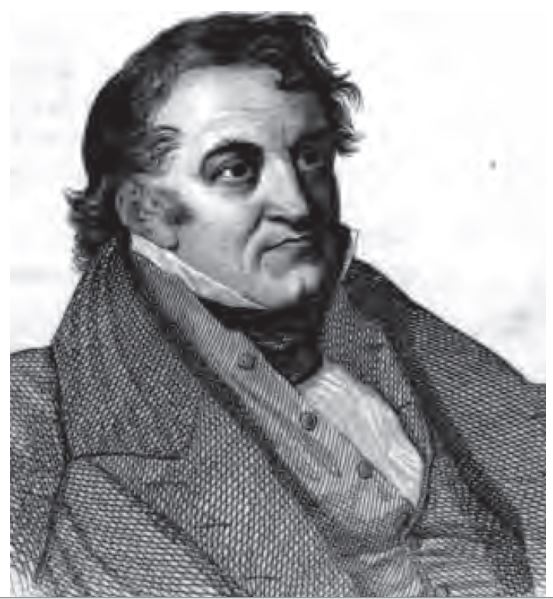
follow up is meant to continue from where Sismondi left off(5),
in a quest
to make the workings of the economy an open book. By that I mean that
its principles, as developed in a logically constructed thesis, could
then be used to furnish answers to any real-world economic problem that
might arise, rather than inherently containing all those possible
answers already. For the real-world economy, being man-made and as such
very much subject to human foibles at all times, requires a synthesis
of its thesis and collective antinomies in order to understand it, and
promulgate an equitable progression in a non-utopian setting.
A
fair bit of work in that regard has already been done, but its task is
huge. Aside from writing a 35+
page outline
quite some
time
ago now, that throws the validity of the orthodox economic
population-endogeneity axiom into doubt; and in addition to the
writings as listed on the right, I have also started on
a book.
Tentatively it is called: EPICONOMICS:
AN
ALTERNATIVE ECONOMICS' THEORY FOR NON-ECONOMISTS.
The term "epiconomics" was coined to signify a
field of study that transcends the level whereon the the study
of conventional economics takes place. Its
preface and introduction, downloadable
on the right,
pretty well identifies what will be involved. Over the years however,
I've found my forte to lie in a succinct bringing to the fore
of facts, as derived from an alternative set of
apparently valid first
principles; with which to successfully challenge both current orthodox
and heterodox economic reasoning.
But I'm not a
storyteller, hence not a very good writer and could use some help in
that regard. In other words, I'm looking for a collaborator and likely
more than one. Thus if
you have some background, preferably though not necessarily in
heterodox economics, and have the knack to spin yarn from bare threads
as it were,
please consider getting in touch
with me, your expertise is
sorely needed. I also would be willing to start a Google or WordPress
discussion
group if the interest warrants it, and so develop a wider purview
from prospective entries. For there is no doubt in my mind that a whole
lot of thinking will be required to cover all the possible
ramifications that will be affected by this new perspective.
To
give you a starting
idea what this alternative approach to uncovering the true nature of
our economy is all about, below are some of its tenets. These are all
deductively determined in terms of three high level axioms; but unlike
all the other approaches from the earliest pamphleteers till modern
theoreticians (with the possible exception of Sismondi), it doesn't
take an existing economy as point of departure. Instead, its axioms
derive from the pre-analytical position, of how an economy would be
organized if it did not yet exist at all. In other words, how a
hypothetical society with the knowledge of modern human beings, but
simply living of the land and obtaining its standard of living from
Nature, would organize an economy to add
to its existing living standard
with a minimum of waste (in supra-economic terms; i.e. not only a waste
of endogenous outputs, but of exogenously located inputs as well).
These additions to output would thereby necessarily have to be valued
in terms
identical to the values of the natural provisions currently being
enjoyed, for otherwise they could not be added as such; which means
that any notionally expressed values of the contemplated system, would
have to annihilate one another at the point of its fruits becoming
additional to a currently enjoyed standard of living.
The essence of the above epitome is that humanity, its sense of
justice, motives, and utilities, and of course natural resources, can
be expressed to exist exogenous to
the economic system of its creation. And accordingly, the economy
becomes strictly a set of means
to exogenously situated ends, being subject to and driven by
the above indicated
exogenous impulses, whereby determinate economic own-values by
definition are ruled out; their very annihilation, instead will be determining
what these values had been, thus
making the economy from its inner core
outward socially determined and its economics non-deterministic. Or, to
put it in formal (mathematic) terms: the macroeconomy's determinant
matrix, although still being the inverse of its supply
matrix, not only isn't contemporaneous with the latter, but it
is complex and incompatible with fixed-coefficient micro values. This
makes supply coefficients indeterminate in time, whose unit of account
moreover is elastic due to its value being induced exogenously; and
only becoming determinate endogenously
through demand, not through
the demand for money, but for final output bit
by bit over time. The cardinal economic question becomes, under what
conditions do these non-fixed-in-time coefficients fulfill their
determinant task; and which kind of, if any, intervention is required
for its optimality.
General equilibrium modeling on the other hand, through base assertions
of micro values in terms of utility that are endogenously fixed as
"real" in time, not only
defines away the possible existence of a higher level truth, turning
the entire process into a trivial tautology without any clarification
potential, but also can be shown to
play loose and
fast with our innate sense of justice as far as a determining utility
principle
is concerned. At a minimum an integrated falsifiable theory of
the unit of account's value would be required, prior to any modeling
done in
its terms; which happens to remain sorely missing
in economics'
approaches of any persuasion.
If this alternate methodology to get to the bottom of how our economy
works is not only logically valid at a high level of generality, but
also relevant in uncovering during "normal" times obfuscated economic
consequences (read: outside of crises, when it doesn't seem to matter
in the least whether values are determinate or not); virtually the
entire body of orthodoxy as well as a substantial portion of heterodox thought
would be rendered inferior
and suspect, by being mutually exclusive.
So here
goes...
1.
The economy
functions non-linearly, contains no paradoxes, yet is sequentially
causative (non of this "simultaneous determination" sophistry of
Mainstream economics); with all supply-side activity keeping it in
disequilibrium as its normal state of affairs, and the demand-side only
potentially and non-contemporaneously pulling it back towards, though
without ever reaching, a true equilibrium in time.
2.
The optimal
distribution of income has a pure economic meaning, and is not pushed
away into some irrelevant ethical realm; as the consequence of a rising
inequality in remuneration, while merely asset-inflationary for some,
diminishes living standard achievability in real
terms for the
rest of the population. Money is no longer neutral.
3.
Monetary phenomena
as well as the nature of capital are derived from axioms rather than
inductively determined; this imparts a quantum leap advancement over
the Keynesian critique of money-neutral (neo-)classical economics,
through allowing comprehensive theories of inflation, growth, and
profit.
4.
As a "true"
economic system, it is able to unify all its micro with its macro
principles, whereby it refutes "the whole is simply the sum of its
parts" of conventional economic theory; the "parts" having been
identified here as an agglomeration of abstractions yet in search of
determinants, and so are in no position to be added up at any time.
5.
It is stimulated
through direct spending and expertise underwritten "new" income, and
not necessarily by the saving/investing of "old" income; as the latter
may lead to a situation where claims to output have grown to far exceed
that output, without such potential inflation being at all detectable
by claim-holders in any economic fashion whatsoever.
6.
It allows a level
of aggregate profit realization that is totally independent of the
remuneration rate of wage earners, but could result instead from the
combination of (more or less ostentatious) lifestyles of profit earners
and a concomitant decrease
in unemployment.
7.
It is vertically
integrated, with the direct spending of profit income at the retail
level, ex post "closing" all economic pursuits, which happens through
ever diminishing numerically interlocking feedback loops; thus not only
ruling out neat (ex ante fixed) econometric coefficients but a static
determinacy as well, and whereby a multiplier of sorts enables the
distribution of achieved growth in final output.
8.
It not only
disregards any determinacy in its capital values and/or equity, but, by
being designated as valid claims to an eventual share in
economy-produced transcendent standard of living, its
economic-claim receivers are in debt to the
economy; whose systemic rebirth and continuation requires a timely,
mutual resolution. This puts the validation of all economic activity
into the realm of distribution, and not into the one of production; and
makes the satiation for produced output, and not its unbounded wants,
the ultimate determinant of economic well-being.
8b.
Therefore
capitalism, or its alter ego finance, as thought to be an own-value
creating entity, is unable to produce an appropriatable surplus in its
conventional meaning of accumulated yet idle balances, (all financing
being in fact deficit financing!) and becomes invalid; even though its
component free-enterprise, having humanistic-judicial criteria
determining the rightful development of its free natural
resources, remains very much valid indeed.
9.
It is unable to
lower its already achieved standard of living, unless this either:
actively, however unwittingly, is induced by an in essence inept but
under current institutional directives unduly powerful, "economic man",
or the population outruns the availability of natural resources.
10.
Not only is it
ideologically neutral, but by enlarge it is also readily understandable
to anyone of average intelligence; for, in spite of being
non-deterministic, it is far easier to understand than conventional
economics.
...
It
possesses many more surprising attributes as most of them, just like
the above, are bearing virtually no resemblance at all to the way the
economy is thought to function, according to present deterministic
(equilibrium) theories. A further example of this, and perhaps
pertinent
to relate at this point as well, involves the notion of debt. But
unlike debt in its
normal meaning, here it concerns a kind of debt that nobody knows or
talks
about; i.e. the debt we owe to the economy by drawing an
income
from it... In order to achieve a modicum of understanding how the
economy of ours functions in general and with regard to the notion of
debt
in particular, it has to become recognized that for economic-continuity
reasons and in terms of evolutionarily to be resolved sunk costs,
disbursed income represents a systemic debt already and as such is no different
than debt as it is commonly understood. Hence, earning some income and
with that money pay off one's debt is a false dichotomy. It is no more
than a robbing of Peter to pay Paul. Not necessarily an overriding
problem, unless, under conditions ever-present in the real world, Paul
not only misses the proclivity but isn't even in a position to
compensate Peter from having been robbed. Instead, acting on the advice
of a clueless economics profession, Paul "solves" the problem either by
pulling plugs or letting it fester and have it develop into the
situation of irresolvable debt that we're finding ourselves in right
now.
The
logic of the above depiction follows the above indicated dynamic
analysis of how our
economy works. And, because of functioning laggedly in a material way,
cannot do without accounts to keep track of the acquisition and
resolution
of who owes what, during the time it takes to provide needed consumable
output from freely provided natural resources. It is only these
accounts that indicate
an economy out of kilter, or, in a worst case scenario, a crash; for
whatever is being accounted for always remains an unaffected and
unscathed
physicality. This kind of reasoning is able to go far beyond what
orthodox and/or Keynsian comparative static and paradox laden economics
professes to be the reality of income. The latter having as its
(assumed to be true) foundational principle that all disbursed income
by firms inherently possesses a positive physical causal agency at the
very outset, and from that point of departure inducing the (thought to
be valid) applicability to direct such determinate income toward either
consumption or investment.
If
this all sounds
interesting enough but you are still not sure it's not the work of a
crank, why not download my translation of Sismondi's
N.P.; that should be sufficiently informative to make up your
mind one way or the other. If once having read Sismondi and thirsting
for more, but you're unable to read beyond a smidgen of French, I was
able to scan, OCR, and translate his "Études sur l'Économie Politique", what now has become "Studies on Political Economy", so this too is available to be downloaded. Furthermore, a most favourable review of
Sismondi's thoughts from a Marxian economics' perspective can be
downloaded here.
It is a
Monograph of
a Conference held December 1923, organized by the Society of Warsaw
Economists in memory of the 150th anniversary of the birth of Sismondi
by: HENRYK
GROSSMAN: SIMONDE DE
SISMONDI ET SES THÉORIES ÉCONOMIQUES. (UNE NOUVELLE INTERPRÉTATION DE
SA PENSÉE.) Translated
and with a Preface added by me.
So
to all you
disgruntled economists out there, fed up with orthodox policy and
crisis management agendas, but having been told ad nauseam that it
takes a system to beat a system; this may just be it!
|
|
PAPERS/ARTICLES
My
excuses in advance for a few occurring instances of self-plagiarization
in
the following articles, especially coming to the fore in ontology.pdf
and the Introduction of an upcoming book. Since a very different
perspective on economic
theory is introduced herewith and all individual manuscripts are
supposed to be intelligible
independently toward that end, it almost comes with the territory.
1. QUESTIONING THE ONTOLOGY OF CONVENTIONAL ECONOMICS
ontology.pdf
ABSTRACT:
The
disputation advanced in this paper is twofold. In the negative sense,
it is that the inner workings of a fundamentally dynamic economy cannot
be be deduced from static first principles. And in the positive sense
what does work, aside from starting out with compatible premises, is a
dialectical type argument in terms of a thesis, antithesis, and
synthesis, regarding the acknowledged dynamics of a free-enterprise
economy run by and for non-utopian human beings. By holding the
neoclassical or mainstream paradigm to be the antithesis of a newly
introduced thesis, it will be able to render a truthful and also
completable explication of such an economy's synthesis. The meta domain
of Justice is held to underlie the whole paradigmatic contestation,
with a version of the “golden rule” (Sidgwick, 1893, pp. 378-9) as meta
axiom underlying the thesis. Unfettered
liberty is shown as meta axiom underlying the antithesis. During
examining existing paradigms, while laying the groundwork for the new
thesis, the concept of orthodox rationality, here in its meaning as
axiomatically underlying the theorem of utility, is shown to be
self-contradictory; and the utility principle of value itself is
indicated to be unjust in terms of the golden rule.
3. IN SEARCH OF
ECONOMIC REALITY
economic
reality.pdf
ABSTRACT:
This
paper introduces a wholly different deductive methodology from all
other conventional approaches to economics; and although underpinning a
few (inductive) Keynesian propositions, it rejects others as being
false. The model it uses is dynamic at its very core, which as such is
thus impossible to be reduced to a static equilibrium condition,
regardless if deemed to be an idealized version of reality or not. This
would mean that when the economy as modeled is viewed at statically,
all its endogenous values have now become indeterminate; and, while
still
remaining approachable for practical purposes, not only are these
values inapplicable to be used as valid points of departure for an
extended theoretical analysis, but also as empirically addable to
provide a valid macro picture of our economy. A consequent conclusion
is that all conventional economics, dealing with situations that are
taken for granted to be, rather than as dynamic processes in a state of
becoming, is fraudulent; innocent perhaps as in the case of the
progressive factions of heterodoxy, but far less so where orthodox or
Mainstream economics is concerned.
4.
TOWARD
NEUTRALIZING MONEY
money.pdf (In progress, needs more work)
ABSTRACT:
Since
there is no shortage of literature critiquing the neutral-money and
General Equilibrium, "rational-expectation" based (macro)
approach of the mainstream in economics, this particular paper,
arguing that delusional monetary impositioning by self-serving and
market-rationality-imbued institutional powers-that-be is the
ultimate reason for permanent disequilibria and consequent economic
crises to keep on occurring, will neither be repeating nor adding
much to the money non-neutrality concept of heterodox economics.
Instead its focus will be on reasoning from the ground up, that if
it is of the essence to sustain an equilibrium over time (i.e.
dynamically) and thereby maximize the well-being of society as a
whole, then money's influence ought to be neutralized
systematically by supra-market forces, i.e. by government
intervention. During the course of its argumentation that money on
the level of applied theory cannot be causal, it will yet and perhaps
surprisingly underpin thereby a variety of progressive ideas already
having been put forward by those economists commonly understood to be
working in a heterodox and/or socialist tradition. Originally written
as an attempt to convince my Marxist friends of the wrongheadedness
of their tack, to the extent of demonstrating that their Marxian
economic theory is fallaciously based on a material constitution of
both money and capital, as held to exist in time (i.e.
statically); this discourse has been greatly expanded since, to now
also include substantive critiques of a number of fundamental
economic notions held by various other approaches in economics.
Excerpted from the above:
Marx_Debunked.pdf
ABSTRACT:
The diametricality of historical materialism
(Marx's premise of a determinate
and positively valued static point of departure) and the accounting for
existing capital values as previously spent and thereafter, for a continuity, dynamically in need to be resolved expenditures (or negatives), never leaving the debit side of a booked ledger and consequently without some attributable return remaining less than valueless in the stark
reality of business accounts – has had Marx needing to resort to
gibberish in his conclusion as to how, yet accounting-wise, the value
of worn-out (capital) means of production gets replaced under
equilibrium conditions, in addition to capturing new profits during the
same investigative period. (i.e.) Marx's "reality" whereby a continued
renewal of already existent and deemed positively valued means of
production becomes assured, as a new and determinate starting point in
perpetuity, is a fake reality regarding such operations in any
accounted-for economy.
5. ETHICAL
ECONOMICS: An Alternative
Perspective. (edited version of a
paper written for a WEA online conference in 2008)
ethical
economics.pdf
ABSTRACT:
This
paper introduces the possibility that for an ethical dimension to the
economics of society to exist logically, the conventionally accepted
identification of economics, as being "the study of human activity as
it relates to ends and scarce means which have alternative uses", will
need to be abandoned and replaced by a definition of economics rolling
out of a set of axioms that are entirely different than the ones
underlying the above definition. Additionally, that by
applying the philosophical methodology of thesis, antithesis, and
synthesis the touted rigour of deductive orthodox theory not
only would be surpassed,
but also thereby establish that the economy will not equilibrate
without the existence of an underlying morality. That is to say, by
using a truth-finding methodology in combination with an alternative
set of axioms, demonstrating by logic that economics without an ethical
dimension isn't just amoral but immoral, because the universally
applied utility principle sets the system up for an inevitable crash;
while in the course of making its case, also rejecting both the latent
Marxian
and Keynesian approaches toward ethics in economics.
6. MMT
CRITIQUE (in reference to: L. Randall Wray's
Working Paper* on money *)
http://www.levyinstitute.org/pubs/wp_656.pdf)
mmt_critique.pdf
|